Misconceptions about people in debt remain stubbornly persistent
Amsterdam Law School
1 December 2025

At the age of 22, Jungmann was already involved in poverty policy as a parliamentary assistant in the Dutch House of Representatives. Now, not only as a researcher, but also as a conversation skills trainer and ambassador for 113 Suicide Prevention, she sees how significant the impact of debt can be. ‘For many people who take their own lives, debt is a major source of the despair they experience,’ she explains. 'The consequences of debt can be profound.'
Has the debt problem changed much over the years?
‘Public awareness has increased enormously. In the last Dutch elections, for example, financial security was a major theme. That awareness has had an effect: over the past 15 years, support for people with debts has increased, and creditors' powers have been restricted. It is more difficult for creditors to collect debts, and a lot has been done to help people with debts. This was all sorely needed. But in my inaugural lecture, I question whether we are on the right track, because despite all the efforts, the problem has not diminished.'

We zetten ook geen diëtist in een winkel voor grote maten. Hoeveel druk moeten we willen uitoefenen op mensen met schulden?
Are people with debts already receiving enough help?
'It is a big step for people with debt to seek help. In the Netherlands, there are 750,000 households with debts. Only 10 per cent of them seek help, and less than 3 per cent are in an arrangement with the prospect of remission. In recent years, much has been done to change these numbers. We have halved the duration of debt settlement schemes, so people no longer have to repay for as long. Volunteer projects have been set up, the application processes have been simplified, and local authorities now even visit people at home to offer help if they are in arrears. But we still see that almost everyone refuses help. Despite all these measures, people are still not making use of the help available.'

Debts are relatively common among people on low incomes. People who have experienced major changes in their lives, such as divorce or redundancy, are also at greater risk. Behaviour also plays a role: people with lower self-regulation are more susceptible to temptation and are more likely to have debts. Limited financial literacy and prolonged stress also increase the risk of problematic debts. Young people and the self-employed have been a growing risk group for several years.
Is the debt problem less severe than we think?
‘That is the question. The current approach assumes we need to help 750,000 households. These are people with payment arrears, but we do not know whether all of them have problematic debt. To determine this, we also need to consider the income and assets of these households. And then there is the question of whether everyone with problematic debts is ready to be helped. Take obesity as a comparison: more than half of Dutch adults are overweight, but not everyone wants help. We don't put a dietician in a plus-size shop. How much pressure should we put on people with debts? In the municipality of Rotterdam, there is a project that buys off all debts. You would think that people would be queuing up to qualify, but that is not the case. Debt assistance is voluntary, as is help with smoking, drinking, and obesity. At the same time, we know that financial stress can be paralysing. We need to find a balance between seeking people out and giving them space.'
We must have an accurate picture of the problem before we make policy
So, is the policy simply not effective enough?
'We don't really know why the debt problem isn't decreasing. What we do know is that we don't always base our decisions on accurate information. For example, the explanatory memorandum to a bill stated that it helps to approach people with debts actively, but studies note that the evidence is inconclusive. It is also often said that the government is the largest creditor. That is not true, because the private sector is. Meanwhile, the government has halved its debt settlement programme to encourage people to seek help. But we have never investigated whether the duration of debt restructuring constituted a barrier. We must have an accurate picture of the problem before we make policy. I specifically study the workings of private law, and we have created a great deal of legislation and adapted working methods in its wake. All this to lower the barrier for people with debts. But despite these measures, the debt problem grew, while poverty declined, and the use of debt assistance remained unchanged.'
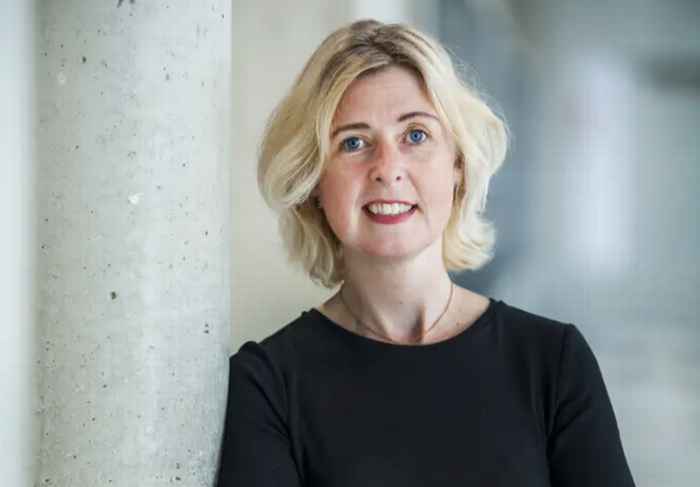
Nadja Jungmann will deliver her inaugural lecture on 4 December. She was appointed Professor by Special Appointment of Special Aspects of Private Law (specialising in debt problems) in 2022. Jungmann also works as a lecturer at Utrecht University of Applied Sciences and is a conversation skills trainer. In addition, she is an ambassador for 113 Suicide Prevention.
How can we develop more effective policies to tackle debt problems?
‘There is a significant problem that we as a society are not dealing with effectively. It could be that we are unable to get a grip on the situation because we do not use definitions accurately and sometimes make claims that are not true. In my inaugural lecture, I raise several research questions that need to be answered before we can develop better policies. An important one is: What are the main reasons why people do not seek or accept support?'
Can the law still make a difference?
‘We need to be critical. What has the law really achieved in terms of debt problems? I don't think the law stands a fair chance if the underlying perceptions are incorrect. That is problematic because we have a duty to apply the law carefully and ensure that promises are kept. Private law can only really make a difference if we tackle the problem in a well-founded manner instead of the current emotion-driven approach.'