'I am looking for the human being behind health law'
Corrette Ploem appointed Professor of Health Law at the University of Amsterdam (UvA)
26 January 2026
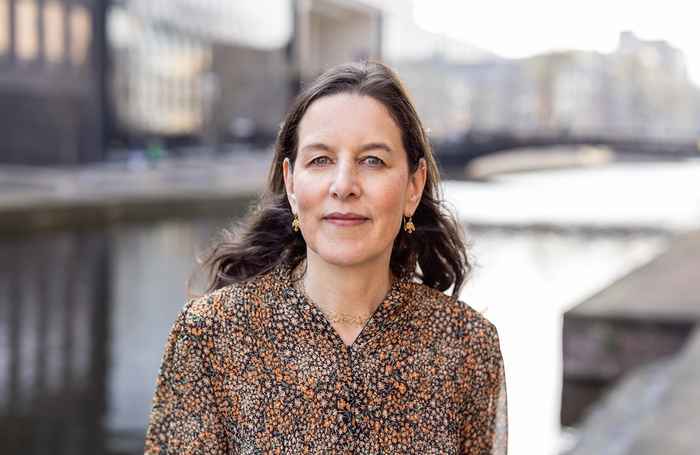
What fascinates you about health law?
‘I come from a family with many medically trained people, so it's a familiar environment for me. During my law studies at the University of Amsterdam, I was immediately drawn to social law, particularly health law. It's not just about applying the law. It's also about reasoning and weighing interests that can be emotionally charged. That appealed to me. Health law was definitely the right choice for me. I was looking for the human being behind the law, especially the vulnerable human being.’
What do you mean by vulnerable people?
‘A core principle of health law is that everyone who needs care knows how to access it, can rely on appropriate care and knows how to exercise their rights properly. If a patient is less digitally literate, has a cognitive impairment or experiences a language barrier, for example, these issues can quickly become under pressure.’
What are the hot topics in health law at the moment?
‘Health law involves difficult choices that are fiercely defended by some people. This is clearly reflected in discussions about embryo legislation, abortion legislation or issues surrounding transgender care, for example. It is very rewarding when you can be of value or significance in this area. In this chair, I want to contribute to the development of young researchers and provide guidance on difficult issues currently playing out in society. For example, I have conducted a legal evaluation in the area of abortion law. I always try to contribute to the debate in an independent manner. It is also very valuable to discuss these issues with students.’

It is a lawyer's job to rise above their emotions and return the discussion to the principles of law.
As an academic, can and should you keep your own emotions out of the debate?
‘It is the role of a lawyer to rise above personal emotions and bring the discussion back to the principles of law. But at the same time, I must be open to all the interests at stake. You have to be able to put yourself in all parties' shoes and understand what really matters to them. This was clearly illustrated in a court case about frozen embryos. A clinic did not have the explicit consent of the father to store the embryos after his death. However, his wife wanted to use them. The judge ultimately ruled in favour of the woman because the clinic had not properly informed the parents about the consent procedure. The clinic was therefore not allowed to destroy the embryos. There are very strong emotions underlying such a case, but in my opinion, careful legal reasoning can still lead to a just outcome.’
You were previously a professor of Law, Healthcare Technology and Medicine. Will this appointment change much?
‘My new chair is not only about healthcare technology but is defined by its bridging function between the medical and legal worlds. It is important to choose your own priorities within such a broad chair. For me, that results in two clear lines of research, both of which demonstrate why medicine cannot do without law.’
What will be your focus?
‘Firstly, I focus on the question of whether laws function well in practice and achieve their purpose, because unfortunately, that is not always the case. As a researcher, you really have the opportunity to dive into the field and see how laws can be improved and made more future-proof. This is very important for healthcare and society at large. My second line of research is technological. How can technological developments, such as AI and digitisation, be implemented in a responsible manner? Collaboration with ethics is essential in this regard. It is a big puzzle due to the interplay between national and European legislation. How do we deal with the use of genetic data? How do you shape the supervision of new technology? Users of healthcare technology, in particular, want as concrete an answer as possible to these questions.’
What do you want to achieve as a professor?
‘In the period ahead, a virtual space for health data will be created in Europe. This is the European Health Data Space (EHDS), an initiative of the European Union to improve cross-border healthcare and research. This should make healthcare easier, even across borders. The EU is also certainly focused on the secondary objectives of this virtual space, such as scientific research, AI development, and effective pandemic response. National implementation is a huge undertaking. From my chair, I am happy to contribute ideas for clear, balanced rules for the use of medical data. The latter is essential because if those rules do not enjoy sufficient public support, the EHDS will not be able to deliver on its considerable promise.’